When capitalized, I believe that “Humanities” refers to the academic disciplines or formal field of study that encompasses art, literature, philosophy, history, human geography, law, and religion. This usage indicates a specific academic area, similar to how one might refer to “Science” or “Engineering” as fields. The capitalization emphasizes the formal study and institutional aspect of these disciplines within universities and scholarly contexts. When written with a lowercase “h,” “humanities” often refers to the subjects or topics themselves, without necessarily implying a formal field of study. It could be used more broadly to discuss aspects of culture, ideas, and human expression that are typical content areas within the Humanities.
For example, I could say that “I enjoy studying humanities,” referring generally to engaging with literature, philosophy, or arts without specifically meaning the academic disciplines. I Imagine a grand cathedral—a magnificent, structured, and historic institution towering with authority and tradition. This cathedral represents the academic discipline of Humanities, standing as a formal establishment that has been carefully constructed over centuries. Each pillar, window, and architectural detail symbolizes the different scholarly areas like philosophy, literature, and history, all supported by rigorous academic frameworks, standards, and methodologies. Just as a cathedral is a center for communal gathering under a common understanding of spirituality, the formal study of Humanities brings together scholars and students in pursuit of deeper understanding of human culture and intellectual achievement.
Individual spiritual experiences—personal, intimate, and diverse–are like moments of human connection, creativity, and introspection that occur outside the structured walls of a cathedral. These experiences can happen through personal reflection while reading a novel, contemplating a piece of art, or engaging in a philosophical discussion with friends. Here, the lowercase “humanities” reflect the everyday engagements with the subjects that embody human culture and thought, accessible to anyone and not confined to the formalized study within academic institutions.
The formal study components such as reading foundational texts like Marx and Engels’ “Manifesto of the Communist Party” and historical documents like “Códice Mendoza” provide a structured framework to understand large historical and cultural shifts. This represents the cathedral-like structure of Humanities, where students systematically explore and dissect various ideologies and their impacts. This also covers one of the main themes of the semester, which was utopia and its polar opposite, dystopia. The Manifesto struck me as a perfect early reading of the section because in theory, a communist society is a utopian one–a stateless classless and moneyless society in which everyone is equal. However in practice communism always falls into a dystopia in practice, and shows how something seemingly perfect can just as easily flip on its head. The academic analysis of various manifestos and canonical utopian/dystopian literature like Thomas Moore’s utopia–one of the first pieces exploring the idea of a perfect society– invites a deep, scholarly engagement with critical theories and literary critiques. This methodical approach is akin to exploring the grand design of a cathedral, understanding each component’s significance and context.
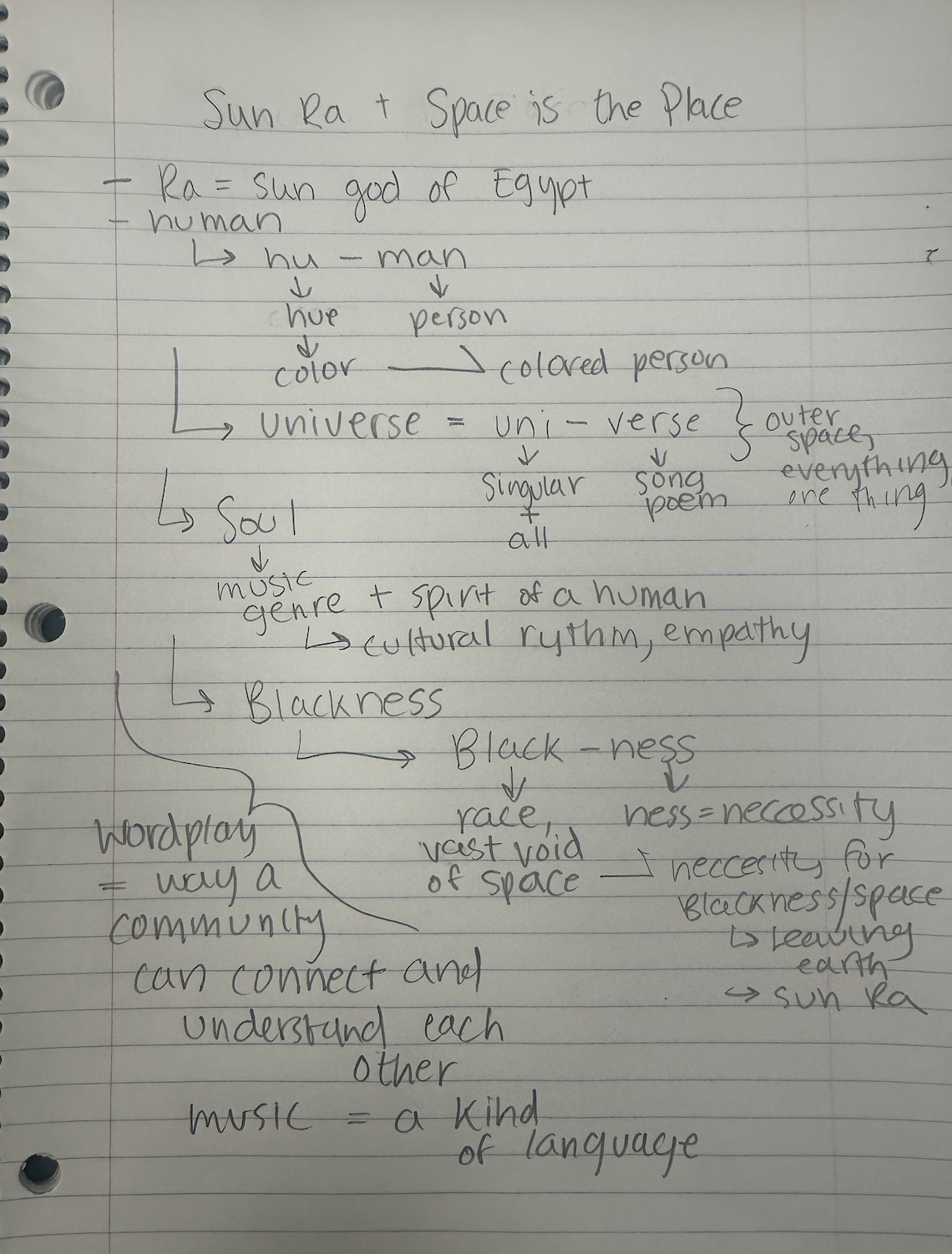
However the importance also lies in the nitty gritty details or the lowercase humanities, and this is demonstrated through textual analysis. For example, in Dr. Sample’s section we closely read poetry from Nahuatl Narrative and Poetry After the Invasion of Tenochtitlan from Miguel León Portilla, Broken Spears to better understand the conditions of the native inhabitants of the Indies. We paired up and each chose a line that struck us the most, unpacking the apocalypse and complete destruction of their society in real time. By zooming in on these specific narratives and accounts from individuals, lowercase humanities embodies the more personal engagement with the sources we read. What also came to mind was Dr. Pile’s plenary on Space is the Place when he discussed the double, triple, and even quadruple meanings of words like “universe,” “race,” and “human.” This small exercise Dr. Pile led rounded out my understanding of Afro-futurism, which we spent so much time on throughout the semester. Before, I felt we looked at mostly big picture moments.
On the DC trip, I was blown away by the Natural Museum of African American History and Culture, and especially the Afro-futurism exhibit at the end, which featured sounds, visuals, and fashion that was previously unknown to me. I loved how the exhibit itself transported its visitors into a completely new world, with disco lighting, upbeat remixed music, and flashy decor. Costumes from famous Afro-futuristic singers and actors were hung on the walls which was really special. However, I felt like I was only getting broad strokes of the genre and didn’t fully grasp its core concepts. However, when we watched Space is the Place and discussed how the genre was thought out down to meanings of individual words, I realized how important small details are to actually comprehending a topic and understood how the genre is creating a more genuine and empowered image of the Black experience.
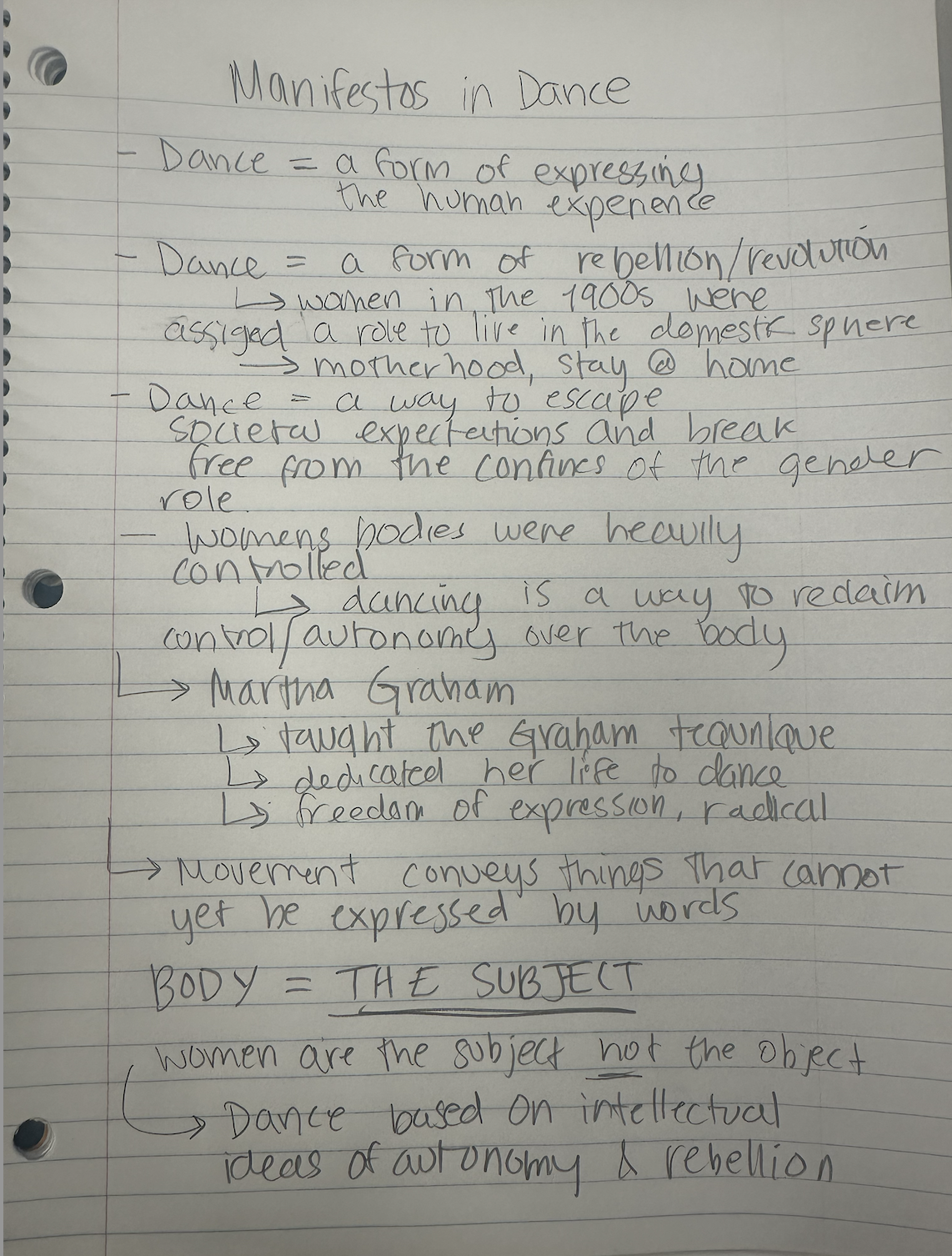
Although I do believe there is a considerable difference between uppercase Humanities and lowercase humanities, many of our assignments have the two definitions overlap. One that comes to mind is our Moodle post on Bill Moyers & Bill T. Jones “Still/Here.” The post asks our thoughts on the reading and our thoughts on what is deemed undiscussable. Croce’s controversial stance that she could not ethically review “STILL/HERE” because it presented itself as beyond criticism—essentially “victim art.” This scholarly analysis belongs to the uppercase Humanities, you must understand the philosophical and ethical underpinnings of such a critique. The assignment pushed me to think critically about the function of criticism within the arts, a key aspect of academic inquiry in art criticism and theory, involving deep engagement with complex intellectual traditions and contemporary debates within uppercase Humanities. However, since we are asked to reflect on our own views regarding the role of art in society there are emotional responses, especially for me as an artist. This task invites introspection and personal expression, hallmarks of the lowercase humanities, where the focus is on individual perspectives and ethical considerations rather than just formal academic analysis.
Ultimately, the course assignments and discussions—from examining dystopian narratives to engaging with afrofuturism and discussing the undiscussable in art—illustrate that the full spectrum of studying humanities is not confined to understanding theories and historical contexts alone. It also involves an exploration of how these ideas impact individual beliefs and societal values. The blend of “Humanities” and “humanities” thus not only educates but also inspires, challenges, and transforms, encouraging a deeper exploration of both the world and internal landscapes.
Pledged.